Sunday, October 04, 2020

Podemos vs Vox in Spain


Podemos or "We can" in English, is a political party in Spain founded in January 2014 by political scientist Pablo Iglesias Turrión in the aftermath of the 15-M Movement protests against inequality and corruption. Podemos is a left-wing populist party which favours anti-austerity, anti-corruption and anti-establishment views. Podemos has called for a renegotiation of austerity measures and seeks to curtail the Treaty of Lisbon.


In 2014 Podemos was the second largest political party in Spain by number of members after the People's  Party (PP). On 9 May 2016, Podemos formed the Unidos Podemos (UP) electoral alliance with United Left, Equo and minor left-wing parties. In 2018, the party joined Maintenant le Peuple. After the November 2019 Spanish general election, in which the party and its allies won 12,8% of the vote and 35 seats in the Congress of Deputies, Podemos entered a coalition government with the PSOE, the first multi-party cabinet in the current Spanish democratic era.

Vox in Latin for "voice", often stylized as VOX, is a Spanish far-right political party. Founded in 2013, the party is led by party president Santiago Abascal and secretary general Javier Ortega Smith. the party entered the Spanish parliament for the first time in the April 2019 general election, having become the country's third political force after the November 2019 Spanish general election that same year, in which it secured 3.6 million votes and 52 seats in the Congress of Deputies.

Vox has been described as a far-right party within the subset of the radical-right family parties, its discourse relies relatively less in populism and more on nationalism. Its economic agenda has been described as "neoliberal". Their view of European Union is that of a Euroscepticism. Inaddition, they seek the return of Gibraltar to full Spanish sovereighnty.

Sunday, September 13, 2020

The best records of Rock between 1991 and 2001...

METALLICA - THE BLACK ALBUM (1991) 


JACKYL - JACKYL (1992)


PEARL JAM - VS (1993)


OFFSPRING - SMASH (1994)


BLIND GUARDIAN - IMAGINATIONS FROM THE OTHER SIDE (1995)


STRATOVARIUS - EPISODE (1996)


PANTERA - OFFICIAL LIVE (1997)


HAMMERFALL - LEGACY OF THE KINGS (1998)


GAMMA RAY - POWERPLANT (1999)


IN FLAMES - CLAYMAN (2000)


ICED EARTH - HORROR SHOW (2001)


Sunday, August 02, 2020

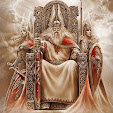
Hygieia. Goddess of personal health


In Greek as well as Roman mythology, Hygieia (also Hygiea or Hygeia in Ancient Greek), was one of the Asclepiadae; the sons and daughters of the god of medicine, Asclepius, and his wife Epione. Hygieia was the goddess/personification of health, cleanliness and hygiene. Hygieia and her four sisters each performed a facet of Apollo's art: Hygieia (health, cleanliness, and sanitation); Panacea (universal remedy); Iaso (recuperation from illness); Aceso (the healing process); and Aglaïa (beauty, splendor, glory, magnificence, and adornment).

 
Hygieia also playesd an important part in her father's cult. While her father was more directly associated with healing, she was associated with the prevention of sickness and the continuation of good health. Her name is the source of the word "hygiene". Hygieia was imported by the Romans as a goddess Valetudo, the goddess of personal health, but in time she started to be increasingly identified with the ancient Italian goddess of social welfare, Salus.


At Athens, Hygieia was the subject of a local cult since at least the 7th century BC. "Athena Hygieia" was one of the cult titles given to Athena, as Plutarch recounts of the building of the Parthenon (447-432 BC): 
 
 A strange accident happened in the course of building, which showed that the goddess was not averse to the work, but was aiding and co-operating to bring it to perfection. One of the artificers, the quickest and the handiest workman among them all, with a slip of his foot fell down from a great height, and lay in a miserable condition, the physicians having no hope of his recovery. 


When Pericles was in distress about this, the goddess [Athena] appeared to him at night in a dream, and ordered a course of treatment, which he applied, and in a short time and with great ease cured the man. And upon this occasion it  was that he set up a brass statue of Athena Hygieia, in the citadel near the altar, which they say was there before. But it was Phidias who wrought the goddess's image in gold, and he has his name inscribed on the pedestal as the workman of it. 


However, the cult of Hygieia as an independent goddess did not begin to spread out until the Delphic oracle recognized her, and after the devastating Plague of Athens (430-427 BC) and in Rome in 293 BC. In the 2nd century AD, Pausanias noted the statues both of Hygieia and of Athena Hygieia near the entrance to the Acropolis of Athens.  Hygieia's primary temples were in Epidaurus, Corinth, Cos and Pergamon. 


Sunday, July 05, 2020

Geralt of Rivia, the saga


The Witcher is a fantasy series of novels and short stories written by Polish author Andrzej Sapkowski. The series revolves around the titular "witcher", Geralt of Rivia. In Sapkowski's works, "witchers" are beast hunters who develop supernatural abilities at a young age to battle wild beasts and monsters. The books have been adapted into a film (The Hexer), two television series (The Hexer and The Witcher), a trilogy of video games (The Witcher, Assassins of Kings and Wild Hunt), and a graphic novel series.


The series of novels is known as the Witcher Saga. The short stories and novels have been translated into numerous languages, including English, German, French, Italian, Spanish, Russian and Chinese. The books have been described as having a cult following in Poland and in Central and Eastern European countries. the video games have been very successful; as of 28 May 2020, The Witcher series have sold over 50 million copies worldwide. The books are...


1. The Last Wish - 1993
2. Sword of Destiny - 1992
3. Blood of Elves - 1994
4. Time of Contempt - 1995
5.  Baptism of Fire - 1996
6. The Tower of the Swallow - 1997
7. The Lady of the Lake - 1999
8. Season of Storms - 2013


The Witcher short stories by the author Andrzej Sapkowski were first published in Polish science fiction and fantasy magazine Fantastyka, beginning in the mid-1980s. The first short story, "Wiedzmin" (1986), was written for a contest held by the magazine and won third place. The first four stories dealing with the witcher Geralt of Rivia were originally featured in a 1990 short story collection titled Wiedzmin (The Witcher), now out of print, with "The Road with no return", which is set before the Witcher stories and features Geralt's mother-to-be.


The second published short story collection was "Sword of Destiny" (Miecz przeznaczenia). Although "The Last Wish", was published after "Sword of Destiny", it replaced "The Witcher" as the first book since it included all the stories in "The Witcher", except "The Road with No Return" (the only story without Geralt). Although new short stories were added to "The Last Wish", they took place before those in "Sword of Destiny". 


Although "The road with no return" and "Something ends, something begins", an alternative ending of the Witcher saga about Geralt and Yennefer's wedding written as a wedding gift for Sapkowki's friends, were later published in 2000 in "Something Ends, Something Begins" and in 2012 in "Maladie and Other Stories" collections, the other stories in those books are unconnected to the Witcher series. In some Polish editions, "The road with no return" and "Something ends, Something Begins" are added to "The Last Wish" or "Sword of Destiny".


Saturday, June 06, 2020

Marco Polo


Marco Polo (1254-1324) was a Italian merchant, explorer, and writer who travelled through Asia along the Silk Road between 1271 and 1295. His travels are recorded in «The Travels of Marco Polo» (also known 'Book of the Marvels of the World and Il Milione, c. 1300'), a book that described to Europeans the then mysterious culture and inner workings of the Eastern world, including the wealth and great size of the Mongol Empire and China in the Yuan Dynasty, giving their first comprehensive look into China, Persia, India, Japan and other Asian cities and countries.


Born in Venice, Marco learned the mercantile trade from his father and his uncle, Niccolò and Maffeo, who travelled through Asia and met Kublai Khan. In 1269, they returned to Venice to meet Marco for the first time. The three of them embarked on a epic journey to Asia, exploring many places along the Silk Road until they reached Cathay (China). They were received by the royal court of Kublai Khan, who was impressed by Marco's intelligence and humility. 


Marco was appointed to serve as Khan's foreign emissary, and he was sent on many diplomatic missions throughout the empire and Southeast Asia, such as in present-day Burma, India, Indonesia, Sri Lanka and Vietnam. As part of this appointment, Marco also traveled extensively inside China, living in the emperor's lands for 17 years and seeing many things that had previously been unknown to Europeans. 


Around 1291, the Polos also offered to accompany the Mongol princess Kököchin to Persia; they arrived around 1293. After leaving the princess, they travelled overland to Constantinople and then to Venice, returning home after 24 years. At this time, Venice was at war with Genoa; Marco was imprisioned and dictated his stories to Rustichello da Pisa, a cellmate. He was released in 1299, became a wealthy merchant, married, and had three children. He died in 1324 and was buried in the church of San Lorenzo in Venice.


Sunday, May 03, 2020

China's Education System


First of all, I have to say that China's Education System is considered one of the best in the world. The Ministry of Education is the one that manages education, which is free and compulsory for students from six to fifteen years old. After this age, students must pay fees and take entrance exams, which leads to a large drop in students at higher levels. Also, from childhood, great importance is given to teaching such as; value of hard work, daily discipline and respect for the elderly by age and hierarchy.


Regarding the value of work, mathematics is taught, for example, it is not because you do not have the talent, but because you need to work more on it. On the other hand, discipline is a fundamental element within education in China. Students study more than ten hours a day; classes last from approximately eight in the morning until three or four in the afternoon, however, after school they return home to continue with task that take several hours, often until nine or the at night. 


Also, students from big cities have additional music, arts and sports classes. Respect is also something that they are taught from a very young age. They speak to their teachers by the word teacher or theacher followeed by their last name, always with kindness and with gratitude to be offering the service of teaching, they even bow before them. Thanks to work, disciplinie and respect. China is now among the first places in educational quality in the world. 


In 2010, Shanghai ranked first on the international PISA exam (Program for International Student Assessment) in the areas of mathematics, reading and science. The most surprising thing about this event is that this was the first year that China participated in the PISA test. Similarly, promoting good behavior is an important part of education in China; Within each classroom, teachers are responsible for conducting student performance ratings, which motivates learning. 


For each correct answer or good behavior of the students or, points are added, on the contrary, if he makes mistakes or has a bad behavior, the asterisks are subtracted. The progress of each of the students is always visible on a board, which stimulates in a healthy way the sense of competence. It is worth mentioning that schools in China are divided into public and private. The level of education in private schools is much higher, which leads to a higher cost, which can reach up to one thousand dollars per month. 


It is important to point out that the foreign language has a great weight within the educational system; therefore they have 2-3 English classes a day. In elite schools, fith and sixth graders already speak English fluently. Since childhood, they have been taught that they must be the best, no matter in what category, this shows us why the Chinese have been leaders in science, culture and the arts for years. 


Friday, April 03, 2020

The Kelsen's pyramid


Hans Kelsen (1881-1973) was an Austrian jurist, legal philosopher and political philosopher. He was the author of the 1920 Austrian Constitution, which to a very large degree is still valid today. Due to the rise of totalitarism in Austria (and a 1929 constitutional change), Kelsen left to Germany in 1930 but was forced to leave this university pot after Hitler's seizure of power in 1933 because of his Jewish ancestry.


That year he left for Geneva and later moved to the United States in 1940. In 1934, Roscoe Pound lauded Kelsen as "undoubtedly the leading jurist of the time". While in Vienna, Kelsen met Sigmund Freud and his circle, and wrote on the subject o social psychology and sociology. By the 1940, Kelsen's reputation was already weel stablished in the United States for his defense of democracy and for his "Pure Theory of Law".


Kelsen's academic stature exceeded legal theory alone and extended to political philosophy and social theory as well. His influence encompassed the fields of philosophy, legal science, sociology, the theory of democracy, and international relations. Late in his career while at the University of California, Berkeley, although officially retired in 1952, Kelsen rewrote his short book of 1934, "Reine Rechtslehre" (Pure Theory of Law), into a much enlarged "second edition" published in 1960 (it appeared in an English translation in 1967). 


Kelsen throughout his active career was algo a significant contributor to the theory of judicial review, the hierarchical and dynamic theory of positive law, and the science of law. In political philosophy he was a defender of the state-law identity theory and an advocate of explicit contrast of the themes of centralization and decentralization in the theory of government. Kelsen was also and advocate of the position of separation of the concepts of state and society in their relation to the study of the science of law.


The reception and criticism of Kelsen's work and contributions has been extensive with both ardent supporters and detractors. Kelsen's contributions to legal theory of the Nuremberg trials was supported and contested by various authors including Dinstein at the Hebrew University of Jerusalem.

Kelsen's Pure Theory of Law is widely acknowledged as his magnum opus. It aims to describe law as a hierarchy of norms which are also binding norms while at the same time refusing, itself, to evaluate those norms. That is, 'legal science' is to be separated from 'legal politics'. Central to the Pure Theory of Law is the notion of a 'basic norm (Grundnorm), a hypothetical norm, presupposed by the theory, from which in a hierarchy all 'lower' norms in a legal system, beginning with constitutional law, are understood to derive their authority or 'bindingness'.